Compare Bay Area commutes: BART, Caltrain, driving and carpools
Test a real commute and choose a route that works both ways
A Caltrain electric train in Santa Clara, photographed in 2024. Check current schedules and stops before traveling.
Plan both directions for the same day, then check stops, connections and payment. Use the door-to-door trial log to compare transit, driving and carpooling.
Write down the actual home and work addresses, your required arrival time and usual departure time. Build a main route and a workable backup for getting home. Include more than map distance or time on board.
1. Plan both directions for the same day
Check items off to organize your thoughts. Your selections reset when you leave this page.
2. Check the stations you can actually reach
BART's official app plans trips with connections and shows live departures, cancellations, service and elevator alerts, and station last trains. Check both directions for your travel day. Record the time needed for connections at either end.
Choose the weekday or weekend schedule and confirm that your train serves both stations. Check live alerts and platform direction; stopping patterns differ. Have a valid ticket before boarding and tap off if using Clipper. Station pages show upcoming trains and facilities.
VTA's instructions recommend Transit for entering a destination, choosing a route and tracking vehicles. Check each bus or light rail connection from home to the station and from the station to work, including alerts. Live arrival estimates can still change.
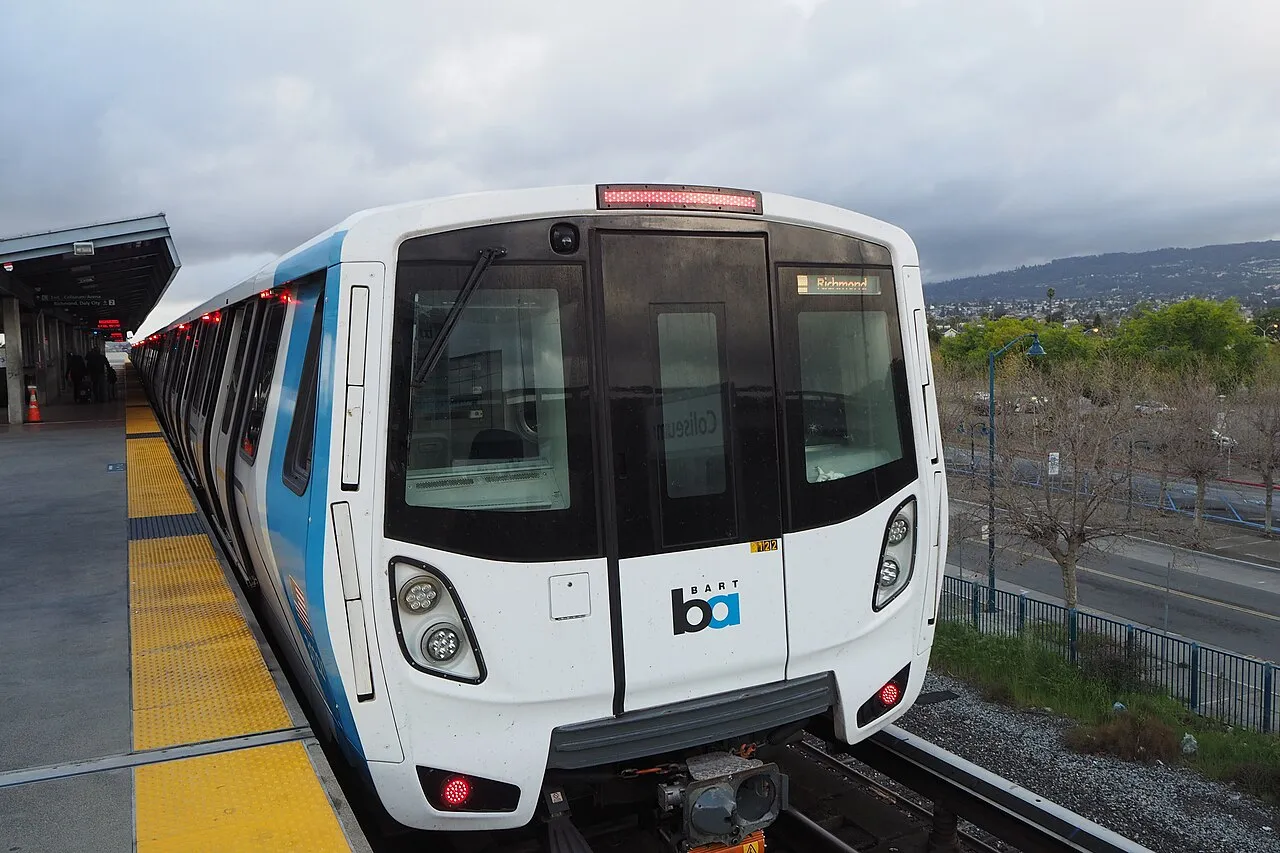
A new-generation BART train at Coliseum station, photographed in 2024.
3. Compare the full round-trip cost of driving and carpooling
For transit, record current fares, connections and station parking. For driving, include fuel or charging, tolls, destination parking and actual traffic delays. Add constraints such as school pickup, carrying items or overtime. If office days vary, compare individual trips with longer-term passes using your own schedule.
Check items off to organize your thoughts. Your selections reset when you leave this page.
4. Try the route during your actual commute hours
Copy this commute trial log
Sample template: replace the text in brackets, review it, then send.
日期/星期:
家门 → 目的地:
必须到达/预计离开:
方式和线路/车次:
走到车站或停车:___ 分钟
等车+乘车+换乘:___ 分钟
Last mile: ___ 分钟
实际去程/回程总时间:
往返票价/油电/桥费/停车:
错过一班或取消时:
晚归备选和额外费用:
仍需确认的问题:
Record when you actually leave home and reach the door. Afterward, identify the hardest segment, such as finding the platform, transferring between stations or catching a work shuttle. Adjust that part on the next trial before adopting the route.
5. Check once more before leaving
Check items off to organize your thoughts. Your selections reset when you leave this page.
Find local commute information
Use your origin, destination, travel hours and trial results when browsing or posting carpool and ride requests so others can understand the arrangement you need.
Browse commutingOfficial resources and service links
Check the original sources for your circumstances. Admission prices, hours, rules, and services may change.
- BART: official app and trip planning(opens in a new tab)
Planning tools for both directions, live departures, cancellations, last trains and elevator alerts.
- Caltrain: how to ride(opens in a new tab)
Weekday and weekend schedules, stops, platforms, valid tickets before boarding and tapping off with Clipper.
- VTA: real-time planning with Transit(opens in a new tab)
How to plan bus and light rail trips, track vehicles and check alerts.
The official BART, Caltrain and VTA instructions below were read on October 7, 2026 to check planning tools, stops, alerts and boarding steps. Your route has not been field-tested; fares, departures, parking availability and connection waits are not guaranteed. Check again before leaving. This date applies only to this article's content update.