Test before choosing a home: cross-bay commuting and everyday access
Compare the office door, the final trip home, and weekend life together
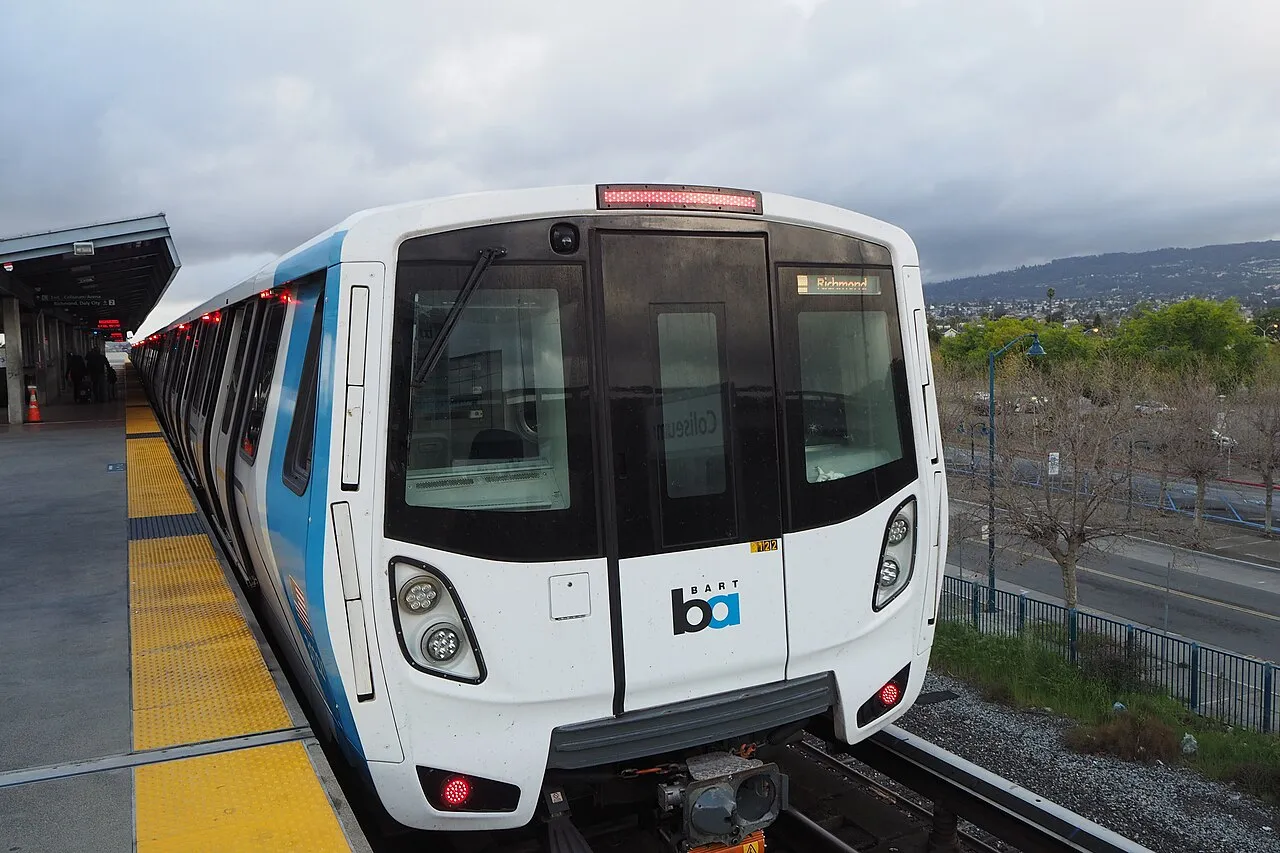
A Caltrain electric train in Santa Clara, photographed in 2024. Check current schedules and stops before traveling.
Use six destination patterns to compare BART, Caltrain, ferries, and transbay buses, then test two commutes and an everyday neighborhood walk. Includes a worked rent-versus-transport example.
Pin the actual entrance to work, school, or your daily destination before choosing an area. A job near Embarcadero, in Mission Bay, or in western San Francisco can imply different housing choices. Keep three candidate addresses, each with a main route and a late-return alternative; this makes trade-offs easier to see than a long list of listings.
Start with the network: five regions do not mean five uniform lifestyles
Within San Francisco, compare Muni and walking. Caltrain is useful for many Peninsula and South Bay trips. From the East Bay to downtown San Francisco, compare BART, transbay buses, and ferries where terminals fit. In the North Bay, include ferry, bus, or driving access. A ten-minute station walk and an additional bus transfer create different routines, even in the same city.
Destination one: downtown and northeastern San Francisco
Near Embarcadero or Montgomery, compare the final walk from BART, the Ferry Building, and Salesforce Transit Center. Some East Bay addresses are closer to a transbay bus stop than BART, so check both. Transbay routes differ in all-day, weekend, and peak service. Test Saturday early shifts and late returns separately; one weekday morning departure does not prove the whole week works.
The Golden Gate Bridge viewed from the water, in a 2011 archive photo. This bay scene does not represent a specific ferry route.
Destination two: western SF, Mission Bay, or places away from rail
Reaching downtown may leave a substantial journey to work. Include Muni transfers, crossings, and movement inside a hospital or campus, then compare a home on a direct city route. Caltrain's San Francisco terminal is around Fourth and King, not a universal downtown destination. For fixed shifts or family handoffs, test whether a later departure still works rather than using the fastest navigation result.
Destination three: the Peninsula rail corridor and office campuses
Around San Mateo, Redwood City, Palo Alto, and Mountain View, check the destination-to-station connection before the home-to-station walk. Verify the specific train's stops; an express may skip yours. If an employer shuttle is essential, confirm stops, eligibility, times, and after-hours arrangements with the employer. A shuttle line on a public map does not guarantee your access.
Destination four: distinguish South Bay BART, Caltrain, and VTA
Milpitas BART, Berryessa/North San José, San Jose Diridon, and Santa Clara are different stations. Berryessa may still require a bus or another connection. Downtown San Jose, Cupertino, and office campuses have different transport access. Use VTA's current system map to complete the final leg and check return service. Do not plan today's commute around future rail extensions.
Destinations five and six: ferry commutes and trips within the East Bay
Near Oakland, Main Street Alameda, or Richmond terminals, compare SF Bay Ferry. Routes such as Harbor Bay and Alameda Seaplane have weekday service restrictions, so do not transfer one terminal's schedule to another. For Larkspur, Sausalito, and Tiburon, check Golden Gate Ferry. Include terminal access, waiting, and the destination-side walk, and decide separately how to return after an evening out.
If most of your life is in Oakland, Berkeley, Fremont, or elsewhere in the East Bay, easy access to San Francisco may not be the deciding factor. Connect your two or three most frequent destinations: classes, groceries, pickups, or a regular activity may matter more than occasional SF trips. Measure convenience by the week you will actually live.
Two tests: a normal workday and a difficult return
Check items off to organize your thoughts. Your selections reset when you leave this page.
On viewing day, walk the everyday neighborhood too
Walk from the candidate home to a grocery store, pharmacy, library, or another service you will use, then locate laundry, parcel collection, and transit stops. Check hours against your routine, whether heavy shopping needs a car, and where you would wait in rain. A daytime viewing does not show a late-return experience. Revisit the public route at a relevant time when practical, checking lighting, crossings, and sidewalks.
How much cheaper makes it worthwhile: separate money and time
Editorial example, not market rent or a fare quote: option A saves $300 in monthly rent but adds $120 in transport, leaving $180. An extra 30 minutes each way, four workdays per week over four weeks, adds 16 commute hours. Compare those hours with care duties, sleep, study, and your budget. One office day per week would change the calculation.
Include utilities, parking, recurring tolls, backup car rides, and extra meal costs in the monthly total. Keep deposits, moving, and furniture in a separate one-time cash column. Confirm employer transit benefits and eligible fares before comparing passes; do not subtract an unconfirmed reimbursement.
Copy this: compare three candidate addresses
Sample template: replace the text in brackets, review it, then send.
Candidate address / area: [complete separately for A, B, C]
Actual destination entrance: [address]
Required days and times: [details]
Main route: [walk → station / train → final leg]
Tested door-to-door time: [outbound / return]
Missing one departure: [delay and alternative]
Late / weekend plan: [route and full cost]
Monthly costs: [rent + bills + transport + parking]
One-time cash: [deposit + moving + essentials]
Nearby resources: [groceries, library, pharmacy, laundry]
Unconfirmed: [shuttle eligibility / parking / elevators / other]
Decision: [acceptable trade-offs and deal-breakers]
Add the walking and onward connection outside the stations to your comparison.
Official resources and service links
Check the original sources for your circumstances. Admission prices, hours, rules, and services may change.
- BART: current system map and stations(opens in a new tab)
Distinguish operating stations from future extensions; Berryessa is not Diridon.
- BART: trip planning(opens in a new tab)
Check separate itineraries for workdays, weekends, and late returns.
- Caltrain: current schedules and stops(opens in a new tab)
Different trains serve different stops; check the return trip too.
- AC Transit: transbay buses(opens in a new tab)
Transbay routes, Salesforce Transit Center, and weekday/weekend service differences.
- SF Bay Ferry: routes and schedules(opens in a new tab)
Distinguish daily routes such as Oakland/Alameda and Richmond from weekday-only services.
- Golden Gate Ferry: North Bay schedules(opens in a new tab)
Larkspur, Sausalito, and Tiburon links to San Francisco, including holiday information.
- VTA: South Bay system maps(opens in a new tab)
Check final bus and light rail legs rather than treating an entire city as a station's catchment.
- 511: overnight transit(opens in a new tab)
Find possible alternatives for a late-night return test.
Transit networks and official planning links checked October 2, 2026. Housing fit, testing methods, and cost examples are editorial analysis. This is not a citywide safety or rent ranking and promises no door-to-door journey time. Recheck for your exact addresses, workdays, and return times.