Preparing for a California driver's license or ID: identify the application type, then gather documents
First-time drivers, out-of-state license holders, foreign license holders, and ID-only applicants follow different paths
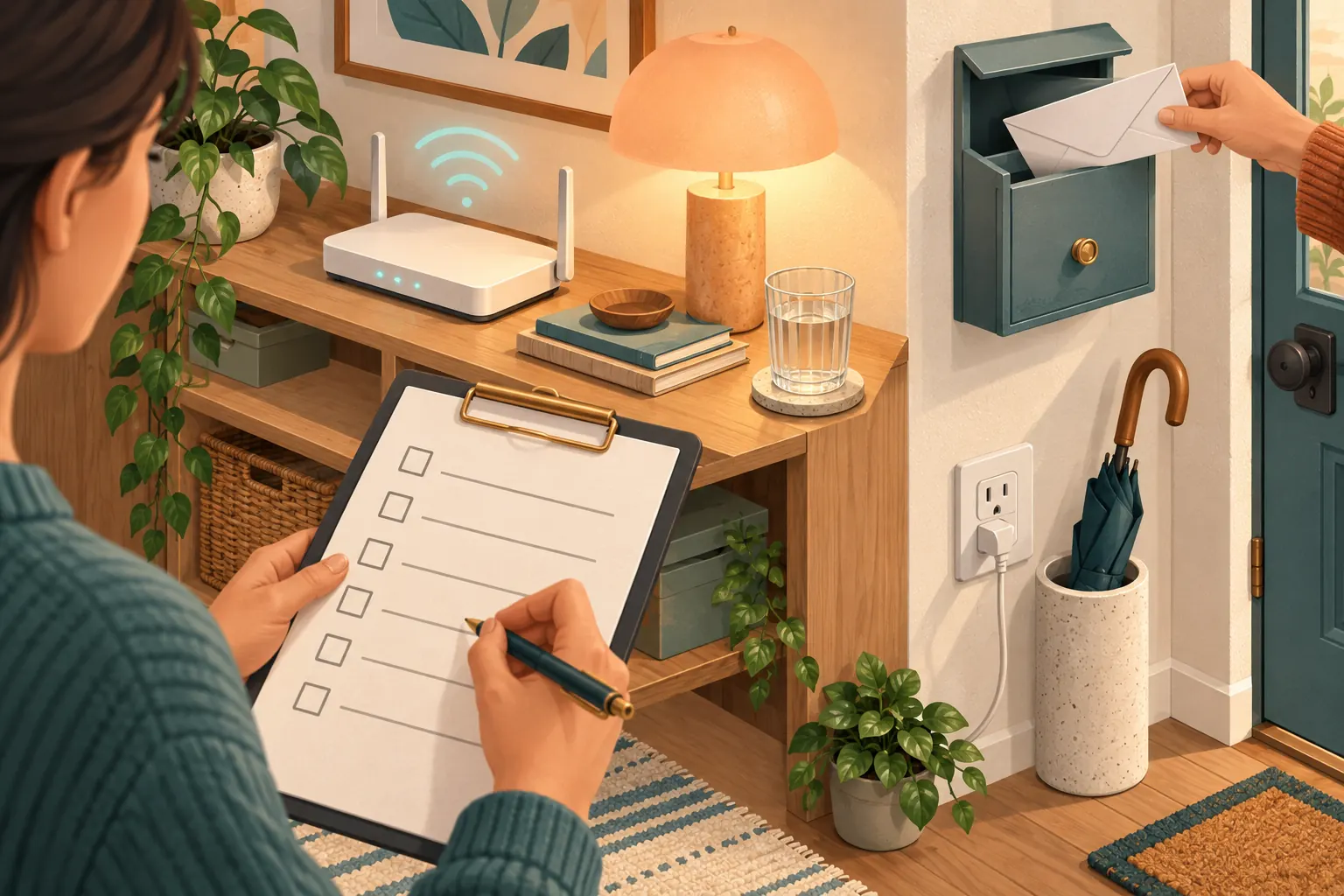
Organize identity, address, and appointment documents together. Original document preparation illustration; not an official ID sample.
Distinguish driving eligibility, a standard ID, and REAL ID. Choose the DMV process based on your existing license and documents, and prepare identity, address, appointment, and testing details so you don't arrive with the wrong checklist.
Start by writing down your goal: do you need to drive, or do you need ID for everyday use? Then note where your existing documents were issued, whether they're valid, and which card you want. Keeping these three questions separate helps you avoid following a friend's old checklist into the wrong process. This guide focuses on adults preparing to apply; minors should check DMV's age and training requirements separately.
Driving privileges, ID cards, and REAL ID are separate questions
DMV's ID Cards page explains that an ID proves identity or age but does not authorize driving. To drive, check the Driver's Licenses process. For identification only, compare a standard ID with REAL ID. REAL ID serves federal identification purposes; it does not waive driving-license tests. Also consider other acceptable documents you already have rather than applying simply because others did.
Follow the process for your existing license; a foreign license is not an out-of-state license
- Never held a license in any state or country: Start with DMV's adult instruction permit process, then prepare for the driving test.
- Valid license from another U.S. state: Review the out-of-state application section and prepare for the application, identity and address documents, vision screening, knowledge testing, and other steps. DMV determines the specific testing requirements.
- If you hold a foreign driver's license, DMV lists a separate application situation and requires a driving test. Don't assume you can simply exchange it.
- ID only: Follow the ID page for in-person verification, photos, and related steps. You do not need a driving test for an identification card.
On DMV's Driver's Licenses page, choose the section that matches your situation before applying or booking an appointment. Existing California license holders renewing, replacing a card, or updating an address should choose that service rather than starting a first-time application. Whether you may drive while applying must be checked against your residency, documents, and permit conditions.
Checked October 4, 2026: Vehicle Code 12505(c) limits an otherwise eligible nonresident-license exemption to at most 10 days after establishing California residency. Driving for employment after becoming a resident requires a California license first. Applying or booking an appointment within 10 days does not extend permission to drive indefinitely on an out-of-state license. Residency depends on domicile and evidence of settling, rather than automatically starting on every visitor’s arrival date. Confirm an uncertain start date with DMV and begin the application promptly.
Adults with a valid license from another U.S. state should use the out-of-state section of DMV’s Driver’s Licenses page. Prepare your SSN, an accepted original or certified identity document, residency documents for a first California DL/ID, and any name-change evidence. The standard non-REAL ID residency list requires at least one acceptable document; REAL ID requires two. At the DMV office, steps include payment, fingerprinting, a photo, vision screening and knowledge testing. Do not apply foreign-license road-test rules automatically or promise an individual test waiver.
For new residents settling in California with their previously out-of-state-registered personal vehicle, DMV’s new-resident page requires registration within 20 days of becoming a resident or bringing the vehicle into California. Confirm the applicable trigger and exemptions; do not wait for a California license to arrive. Prepare signed REG 343, the latest out-of-state title and registration or acceptable alternatives, and authorized REG 31 vehicle verification. Leased or financed vehicles require attention to signatures and title handling. REG 343 accepts an out-of-state DL/ID number and issuing state if no California card has been issued. Smog requirements depend on the vehicle and exemptions. Vehicles driven or parked on California roads also need compliant financial responsibility and proof. Fees and taxes depend on the vehicle. Submit the application and fees on time even if title or smog documents remain outstanding.
Notify DMV within 10 days of an address change on an existing California record. This does not replace an out-of-state license transfer or first California vehicle registration. Online Change of Address has eligibility rules: people without a California DL/ID or SSN cannot use that online process; check applicable alternatives such as mailing DMV 14. Have old and new addresses ready; add a vehicle to MyDMV Garage before updating it. Changing only the license or vehicle address does not automatically update the other, although both may be selected together. Processing can take up to three days and does not automatically issue new documents. First-time applicants should enter the correct address in their respective applications.
Clarify the document's purpose and the receiving organization's requirements first. Original translation preparation illustration; documents shown are illustrative.
Identity and residency documents for REAL ID
Open DMV's interactive REAL ID Checklist, select an accepted identity document, and check whether name-change documents are needed. The address section requires two different printed documents showing the applicant's name and the California mailing address matching the application. Leases, bills, and other documents must meet the listed requirements; a screenshot is not automatically acceptable.
If a bill is not in your name, the official checklist separately explains acceptable proof of family relationships; you cannot simply substitute a roommate's bill. Enter your SSN as required by the application. DMV's What Is REAL ID page describes possible exceptions, but not having received a number yet is not the same as qualifying for an exception. Confirm with DMV first. Even after uploading documents online, check which originals or certified copies you must bring in person.
When your documents differ, use the appropriate process instead of guessing eligibility
AB 60 is a separate driver's license path for applicants who cannot provide proof of lawful presence in the U.S. but meet DMV's other requirements and can prove identity and California residency. It is not the same as REAL ID. Check DMV's AB 60 page and dedicated checklist for documents and follow-up verification. DMV should also resolve other applicants' identity-document, expiration, or name-mismatch questions. Don't post passports, SSNs, or immigration documents publicly for strangers to review.
Before your appointment, check both your document folder and the day's arrangements
Check items off to organize your thoughts. Your selections reset when you leave this page.
Ask before you go, and save your next steps afterward
Narrow uncertainties to two or three specific questions, such as "I'm applying for a standard ID; does this address document qualify?" That is more useful than only asking what to bring. After the visit, keep receipts, requests for additional documents, and follow-up links. A booked appointment, document pre-review, or completed test does not mean a final ID or license has been issued. Check current official information for fees and mailing progress.
Questions to ask DMV about application documents
Sample template: replace the text in brackets, review it, then send.
My purpose: [driver's license / standard ID / REAL ID]
Current license status: [none / another US state / another country / existing California document]
Service needed: [first application / renewal / replacement / information update]
Questions to confirm:
1. Which application and appointment option should I use?
2. Does [document type, without ID numbers] meet the requirements for my chosen card?
3. My name/address differs in [brief description]. What supporting documents are needed?
4. Which originals must I bring? Do tests or language assistance need a separate appointment?
This checklist organizes questions for DMV; it is not an application form or proof of eligibility.
Need transportation for your appointment?
After confirming your appointment, you can post a ride request with the city, date, passenger count, and return needs. A platform ride does not replace DMV road-test requirements for the vehicle, insurance, or an accompanying qualified driver.
Official resources and service links
Check the original sources for your circumstances. Admission prices, hours, rules, and services may change.
- California DMV: different driver's license application situations(opens in a new tab)
Compare application and testing paths for people with no license, out-of-state licenses, or foreign licenses, and review rules for minors.
- California DMV:ID Cards(opens in a new tab)
Confirm the purpose of an ID card, standard versus REAL ID options, and where to apply.
- California DMV: REAL ID document checklist(opens in a new tab)
Build your own checklist for identity documents, name changes, and two proofs of address.
- California DMV: What is REAL ID?(opens in a new tab)
Check its uses, SSN requirements, and possible exceptions. REAL ID does not replace a driving test.
- California DMV: AB 60 driver's licenses(opens in a new tab)
Review eligibility, document verification, and testing requirements for this separate application path.
- California Vehicle Code 12505: new-resident driving exemption(opens in a new tab)
Check residency, the 10-day driving exemption and driving-for-employment restrictions.
- California DMV: new residents and vehicle registration(opens in a new tab)
Check the 20-day requirement and registration entry point for an out-of-state vehicle.
- California DMV: out-of-state vehicle registration documents(opens in a new tab)
The guide currently linked from DMV’s new-resident page covers REG 343, title, registration evidence, REG 31, smog and fees.
- California DMV: standard license residency documents(opens in a new tab)
Standard applications require at least one acceptable residency document; REAL ID has a separate two-document requirement.
- California DMV: online address-change eligibility(opens in a new tab)
Check existing California records, online eligibility, old and new addresses, vehicle linking and processing time.
- California DMV: driver license or ID updates(opens in a new tab)
Check the 10-day address-notification requirement and DMV 14 submission options.
- California DMV: basic out-of-state registration requirements(opens in a new tab)
Check identification numbers before a California card is issued, ownership evidence and vehicle verification.
- California DMV: vehicle insurance requirements(opens in a new tab)
Check financial responsibility and proof for vehicles driven or parked on California roads.
Compiled by BAYLINK editors. New-resident driving limits, vehicle registration, address changes and their document sources were reviewed October 4, 2026. Other ID and AB 60 preparation material retains its September 8, 2026 review. DMV determines individual residency, exceptions and document eligibility.