Just moved to the Bay Area: what to do in your first 7 and 30 days
From getting inside and staying connected to stable accounts and everyday routines
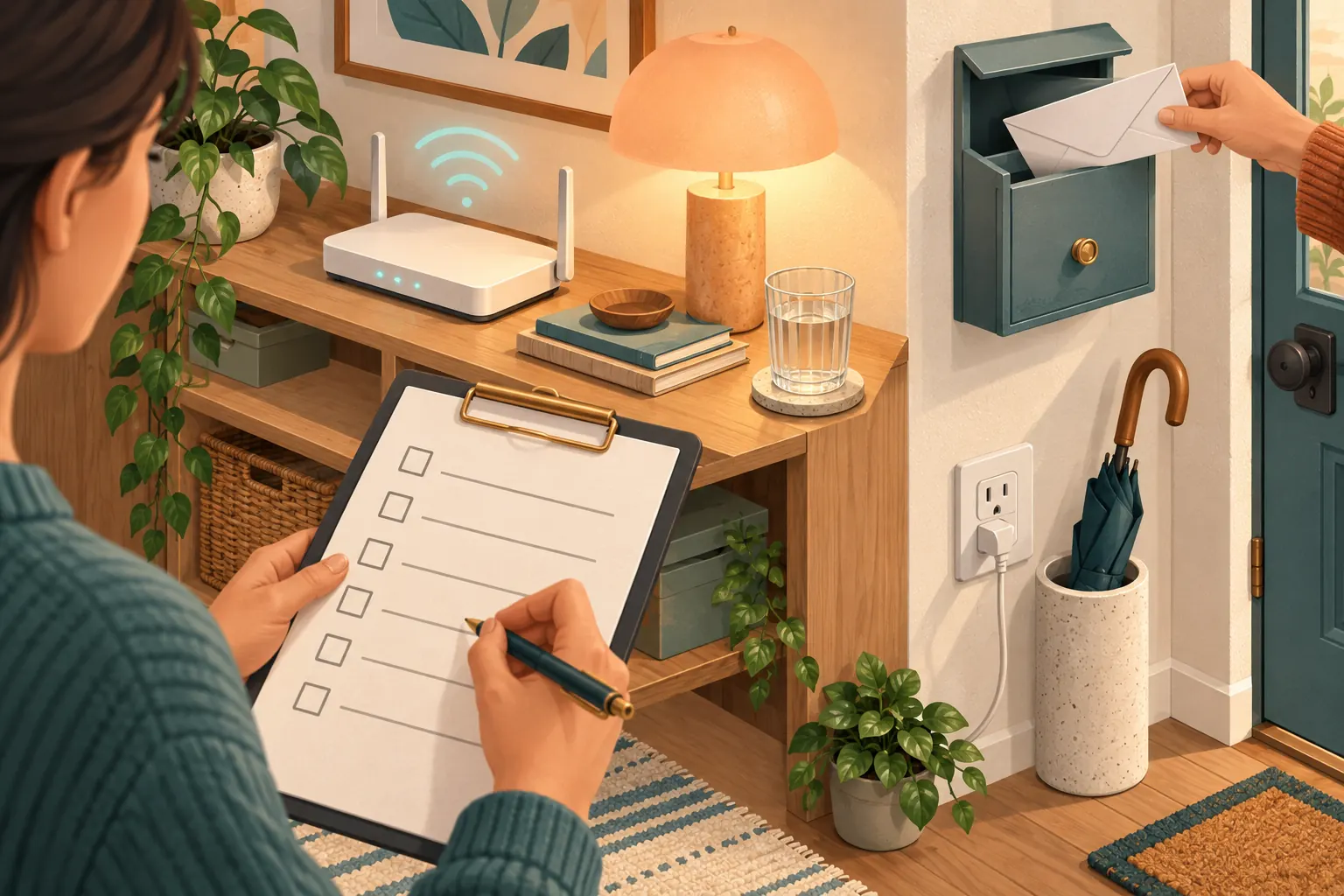
From setting down your bags to making a place feel like home. A conceptual illustration, not an actual listing.
Break your first month into workable tasks: move-in, phone and transit, utility responsibility, address documents, library access, and appointments, with prerequisites, records to keep, and official help.
If your accommodation is settled, start with the handover. If you are staying temporarily, first establish communication, test your commute, and organize documents; leave permanent-address tasks until the address is known. The sequence makes each step support the next: accurate addresses and utility responsibilities simplify accounts, mail, and appointments.
Before arrival through day one: access, a place to sleep, and contact
Check items off to organize your thoughts. Your selections reset when you leave this page.
Days one–two: test your phone, payments, and tomorrow's route
Test outgoing and incoming calls, texts, and navigation away from Wi-Fi. Before choosing a long-term phone plan, confirm device compatibility, effects of number transfer on existing verification texts, the post-promotion price, and cancellation terms. A temporary data plan may not include local calls or texts. Save home, work or school, and a basic shopping stop, then test the route and your transit payment in daylight.
If you need a bank account, request the institution's document list for your situation before booking. Another person's documents are not a universal rule. Keep a working backup payment method and distinguish debit spending, credit card bills, and account charges. The milestone is being able to contact people and make essential payments; a long-term plan can follow later.
Set up utilities and internet, and update your address according to your move-in schedule. Original illustration about settling in.
Days two–three: assign bill responsibility before opening utilities
Record who holds and pays each electricity, gas, water, waste, and internet account, and from which date. A roommate may hold an account or a building may bill centrally; working lights do not mean the account is in your name. Use PG&E's start/stop/transfer service only where appropriate. Keep confirmation numbers, start dates, and access requirements, and track old-account closure separately.
For internet, use the exact unit number to confirm installation availability, the earliest appointment, equipment and installation costs, and any building access needed. Test a temporary connection before committing to remote work or classes. A neighbor using a provider does not guarantee service to your unit. Close the task only after checking the first bill.
Days three–four: build a reusable document folder
- Housing records: signed agreement, handover, full mailing address and unit, with printable copies.
- Account records: confirmations and bills in your name, appointment details, and written document requests.
- Names and addresses: check spelling, hyphens, name order, and unit numbers. Do not alter official documents to make them match.
- Storage: use protected personal storage, keep originals separately, and describe document types in public questions without posting numbers or full identity documents.
Days four–seven: choose the right appointment and confirm documents
A driver license, standard ID, REAL ID, and address update are different transactions. Define your purpose before opening the appropriate DMV process. REAL ID has its own requirements for two acceptable printed California address documents, identity, and name continuity; those rules are not universal across DMV services. Ask about acceptable alternatives before visiting if you are in temporary housing or the documents have different names.
Keep a separate school or work page listing contacts, required steps, stated deadlines, and missing documents. Have the relevant institution or a qualified professional confirm identity, work authorization, or other eligibility questions. Days since arrival are not a universal legal timetable. Any actual deadline you receive takes priority over this editorial order.
During week one: save public resources and help contacts
Choose a library near home or your commute and check its hours and card documents. SFPL offers free cards to California residents, with in-person verification after an online application. Visitors or people missing documents should ask what access is available rather than assuming full borrowing or museum-pass privileges. On your first visit, check card eligibility, computers and printing rules, and one relevant language or learning program.
For San Francisco city matters, use 311, or 415-701-2311 from outside the city; multilingual help is available around the clock. For food, shelter, employment, or family-support referrals, try 211. The 211 Bay Area page lists SF, San Mateo, Santa Clara, Marin, Napa, and Solano as its direct-service counties; East Bay residents should use the relevant county service. State your ZIP code, need, and language. A referral is not benefit approval.
Days eight–fourteen: update mail and check everyday services
If you need mail forwarded from a previous U.S. address, use USPS's official process for the appropriate temporary or permanent change and identity check. Forwarding takes time and does not update banks, insurers, schools, employers, or government records; update those separately and save confirmations. A newcomer from abroad without a previous U.S. address need not create a forwarding request just to tick a box.
Turn everyday care arrangements into actual contacts: ask your plan, school, or employer about coverage start dates, the service network, member contact details, and pharmacy procedures. A card alone does not establish that every service is active. For children, older relatives, or regular care duties, align pickup and care times with your tested commute.
Days fifteen–thirty: adjust using real bills and commute experience
Separate real spending into rent, bills, food, transport, temporary lodging, and one-time purchases. A deposit ties up cash and its return depends on the agreement; do not count it as an ordinary monthly expense. Include extra commute time and car trips when comparing homes. If your long-term lease is still undecided, use actual experience to refine the area shortlist.
Finish with a household contact rehearsal: know the full address, building maintenance and emergency contacts, and a meeting point if separated. ReadySF's worksheet helps record home and work meeting places plus an out-of-area contact; residents of other counties should find their local alert service. Make the plan understandable to everyone and available offline or on paper.
First-month tracker: close tasks with confirmation
Sample template: replace the text in brackets, review it, then send.
Task: [for example internet installation / library card]
Prerequisite: [confirmed address / documents / available appointment]
Responsible institution and official link: [details]
Next action: [one achievable step]
Institution's deadline: [record exactly if one exists]
Personal target date: [date]
Completion evidence: [confirmation / bill / issued card]
Unresolved: [missing document / unconfirmed appointment / verification needed]
Submitting an application is not the same as completing the task.
Ask with your city, issue, and existing records ready; request Chinese assistance if needed.
Official resources and service links
Check the original sources for your circumstances. Admission prices, hours, rules, and services may change.
- PG&E: start, stop, or transfer service(opens in a new tab)
Use when PG&E serves the address and the rental arrangement requires your own account.
- USPS: mail forwarding and address changes(opens in a new tab)
Identity verification, temporary or permanent forwarding, and separate updates to government and business accounts.
- California DMV: REAL ID document checklist(opens in a new tab)
Build a checklist for your own documents; REAL ID address requirements do not apply to every transaction.
- SFPL: free library cards(opens in a new tab)
California resident eligibility, in-person identity checks, and public resources.
- SF.gov: 311 nonemergency city help(opens in a new tab)
Round-the-clock multilingual help for San Francisco city services, with a separate number from outside the city.
- 211 Bay Area: coverage and referrals(opens in a new tab)
Referrals for food, shelter, and other community support; confirm the service for your county.
- ReadySF: household emergency contact plan(opens in a new tab)
Plan home and work meeting points, an out-of-area contact, and AlertSF notifications.
Official service links checked October 2, 2026. Days 1, 7, and 30 are editorial planning milestones, not government deadlines, eligibility decisions, or a mandatory checklist for everyone. Confirm identity, licensing, school, insurance, and address-notification requirements with the relevant institution.